


With some clarification on tariffs from legal battles and a sense that prices are softening, the used equipment market is following its usual seasonal trends with no immediate sign of tariff surcharges on new machine pricing. But disruption in the global oil markets due to the ongoing conflict in the Middle East could drive up diesel prices and have fleet managers feeling the pain at the pump in the coming months.
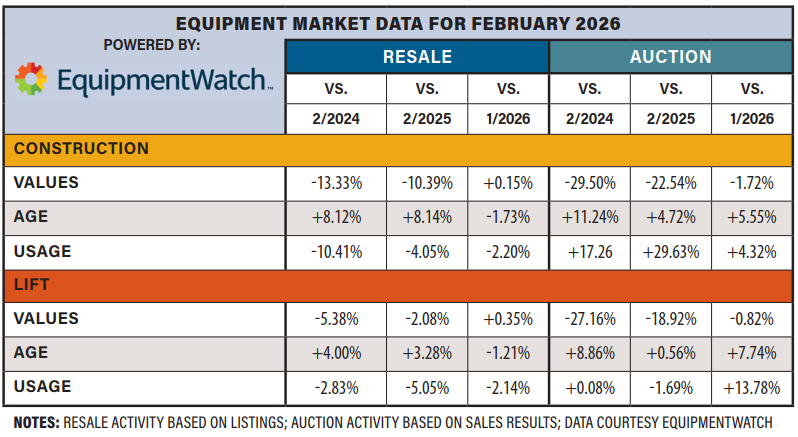
Prices for used equipment are in their seasonal upward swing, as the new 2026 models enter the market and relatively newer machines show up used. This annual trend is seen in data from industry analyst EquipmentWatch, with used equipment prices up slightly— a 0.15% increase at resale. Pricing at auction can show greater variance at this time of year due to lower volume, explains Brendan Gallagher, sales analyst with EquipmentWatch. “There’s just fewer data points at auction; that activity always slows down this time of year,” he says.
Related link: ENR 2026 1Q Cost Report PDF
Subscription Required
With seasonal pricing, expect a rise in the first half of the year and an ebb later on. “The previous month shows the same trend: At the new year [used equipment] resale prices start to creep up, and taper off in the middle of the year.”
There were concerns last year that ongoing tariff pressures might be reflected in 2026 models having higher manufacturer suggested retail pricing, but that has not materialized yet, says Gallagher, who notes this is not the case in industries outside construction and lift equipment. “So far, looking at Caterpillar and Deere, we are seeing 2026 MSRPs up 1% to 5%,” he says. “But if you look at other industries, like commercial trucking, they are seeing 9% to 12% increases in 2026 MSRPs—that’s driven by tariffs.”
For Deere, the first quarter of 2026 saw growth in construction equipment, with net sales up 34% year-over-year, but profits were less impressive. Josh Beal, director of Deere’s investor relations, attributed this to tariff pressures and unfavorable global equipment mixes, speaking during Deere’s Feb. 19 quarterly earnings call.
Perhaps more importantly, Deere has been able to mitigate the impact of tariffs through reducing overhead. “Excluding tariffs, production costs were lower year-over-year for all business segments in the first quarter,” Beal said. He added that the construction segment remains a “bright spot” for Deere, driven by ongoing government investment in infrastructure, declining interest rates and rising demand in the rental market.
Deere is forecasting a 15% increase in sales of construction equipment for the rest of 2026 globally, with a 5% rise in the U.S. and Canada.
Looking for quick answers on construction and engineering topics?
Try Ask ENR, our new smart AI search tool. Ask ENR →
While the full impact of the ongoing U.S.-Israel-Iran War is still unclear in the long-term, short-term disruptions in oil and gas production have already led to rising prices for gasoline and diesel due to supply issues.
“Oil prices are already looking sky-high right now,” notes EquipmentWatch’s Gallagher. While contractors are likely to include a rise in diesel prices when calculating their cost of ownership, Gallagher says not to expect them to re-fleet with electric-powered or more fuel-efficient machines. “I don’t expect any crazy shifts immediately from a spike [in fuel prices], as these costs get included in bid estimates for construction, so even though the equipment mix is mostly the same, the cost could be reflected in project bids.”
Related links:
Economics: Non-building Work Leads Industry Starts Through First Quarter
Confidence Index: Data Centers Propping Up a Fragile Construction Market
Labor: Executive Compensation Increases Continued to Drop Last Year Following 2023 High
Equipment: Equipment Pricing Maintains Stability, but Rising Fuel Costs May Impact Fleet Refreshes
Methodology: Tariffs Contributed to Price Hikes for Many Materials in 2025