

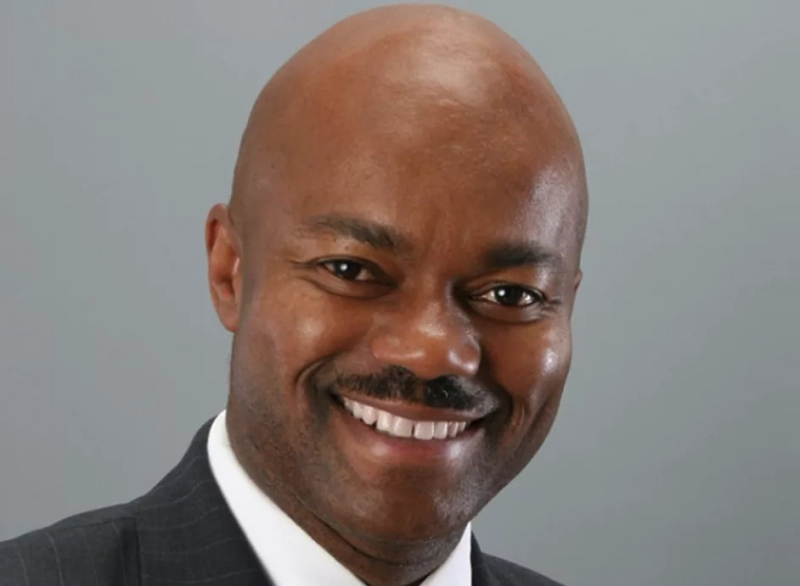
David Cayemitte is the founder and CEO of Embrace Partners, a Princeton Junction, N.J.-based insurance sector consultant and CEO of the Minority Business Development Institute (MBDI), which provides training and support to boost small minority, women and veteran-owned construction businesses. He has more than three decades of experience in the corporate insurance market, including with AIG and Travelers. Embrace Partners is the first and only certified MBE wholesale insurance brokerage firm with a license to operate in all 50 states. The institute announced the launch of MBDI University, an online training program, in November.
This interview with ENR Deputy Editor Aileen Cho has been edited and condensed.
ENR: Tell me about the recent launch of Minority Business Development Institute’s MBDI University and how it differs from other inclusion initiatives in the industry, including Embrace’s role in providing bonding and underwriting services.
Cayemitte: The launch of MBDI University is our most significant initiative to date. It is a national platform designed to transform small business owners into strong construction executives through a comprehensive, four-year curriculum.
RELATED LINK: Online Program Launched to Boost Skills, Bonding for Small and Disadvantaged Firms
A key component of this ecosystem is the role of Embrace Partners. It serves as the surety bonding underwriter for our participants, providing the actual bonding capacity that these businesses need to scale. This combination of education and tangible financial backing is a massive differentiator in the market.
While most industry initiatives offer six- or eight-week programs, those are often too brief to cultivate the systemic change required for true scaling. We take a different approach. We focus deeply on developing strong financial presentation, which takes time. Our four-tier program allows for progressive learning—and because we use upfront knowledge assessments, we can place business owners directly into the classes that address their specific gaps.
We have also been pioneers in how we deliver this training. As far back as 2009, we were offering hybrid models—live-streaming our New York City classes to participants upstate. That was revolutionary at the time. Post-COVID, the world has caught up to that ‘zoomification,’ and we have doubled down on engagement. MBDI University takes this technology to a new level with a robust learning management system that allows us to go beyond simply helping contractors qualify for bonding; we are building the infrastructure for their long-term success.
When was MBDI founded, and who are some of your major industry partners?
Cayemitte: MBDI was officially founded in December 2010, but in many ways, it was years in the making. It was formed as a direct response to a gaping hole we saw in the market: the need for a dedicated institute that didn’t just talk about opportunity, but also provided the rigorous education required to remove barriers to success. We realized that ‘access’ to contracts doesn’t mean much if you don’t have the ‘readiness’ to execute them. The institute was built to be that bridge.
Of course, you cannot drive this kind of systemic change in a silo. We are incredibly proud to have major industry heavyweights walking this path with us—partners like Travelers Corp., Flagstar Bank, Axis and Octave Group that are critical allies in understanding that investing in these small businesses is an investment in the future of our industry.
What is your origin story? What got you into this particular niche of the construction industry? What drew you to construction?
Cayemitte: My favorite movie is To Sir, with Love, a film that highlights themes of respect, education and the transformative power of understanding. Those themes, coupled with my mother always instilling in me that the most important thing you can do in life is to help others, became the bedrock of MBDI.
After spending 21 years in insurance underwriting and executive management—including 16 years at AIG and 4.5 years at Travelers—I started the Cayemitte Group. But the true turning point came when the road of life led me to New Orleans in the devastating aftermath of Hurricane Katrina.
In late 2005, there was intense public focus on how reconstruction dollars were being spent. Local business owners, particularly minority owners, were frustrated that large federal contracts were going to out-of-state companies rather than to local firms that needed them most. In response, [former] Mayor Ray Nagin signed an executive order in October 2006 to drive local participation, mandating goals like 50% local business participation and 35% for MWBE businesses.
I had joined the National Black Chamber of Commerce, which invited me to a pivotal meeting with the [US Dept. of Housing and Urban Development.] I vividly remember sitting in a Washington D.C. office with 16 ‘men in black’ who essentially told me: ‘Go meet with the Mayor’s office. Help them understand the impact of this order.’ Their concern was practical: HUD would be heavily involved in rebuilding, and since it is a public agency, contractors would need surety bonding. The reality was that most small local businesses simply would not qualify.
When we met with New Orleans officials, we confirmed that the city had no resources to support small businesses in qualifying for surety. We began insuring and bonding a few dozen firms in the south to bridge that gap.
That success caught the attention of Ronald Langston, national director of the federal Minority Business Development Agency, who met with me to discuss serving [its] offices nationally. That was the moment we sought national licensing. Shortly after, I got involved with the State of New York to manage the [Dormitory Authotity of the State of New York] Surety Bond Capital Access program. It was this evolution—from the crisis of Katrina to a national mandate—that ultimately led us to birth MBDI, our not-for-profit arm dedicated to preparing small businesses to elevate.
Today, we have turned that experience into a complete ecosystem we call The Platform. The institute has positioned more than 1,000 contractors for bonding. Embrace Partners, which I launched in 2022 as a certified MBE licensed in 50 states, acts as a wholesale brokerage and surety bonding underwriter. The Cayemitte Group handles the insurance side.
Together, we live by the motto: ‘We Educate, We Bond, We Insure.’ This platform allows large construction managers and developers to meet their [contract] inclusion goals, which often run in the hundreds of millions of dollars, by ensuring the small businesses they hire are actually financially capable of doing the work, and by positioning them to apply their insurance premium dollars toward these goals.
How has the industry evolved regarding small and disadvantaged firms? What are your goals?
Cayemitte: To be honest, the evolution has been a journey of good intentions colliding with hard realities and mixed with political posturing. I often think back to my time in New Orleans after Katrina. The political will was there. We had executive orders explicitly calling for 35% participation from minority-controlled businesses. But I remember sitting in that room with the officials from HUD, and the roadblock wasn’t a lack of talent; it was a lack of access to surety bonding.
My goal is to shift the industry’s focus from ‘compliance’ to ‘capacity.’ We cannot just set goals if the infrastructure isn’t there to support them. That is why we built ‘The Platform’ combining education, bonding, and insurance. We need to stop asking if these companies exist and start ensuring they have the financial backing to perform. My vision is that we move beyond counting participation percentages and start measuring the sustainable wealth and stability we are creating for these business owners. At the end of the day, as the businesses we train grow strong, they create really well-paying jobs, and careers that can lift families out of poverty and into the middle class.
Our education platform always leads back to affordable access to capital. That is why MBDI, in concert with Embrace Partners, is closing on an underwriting credit facility for small businesses. This is a tangible step forward in solving the capital access issue that holds so many contractors back. We expect to pre-qualify more than 150 firms for bonding in the first half of 2026 alone. We are also adding back-office support services under our ‘One Source Advantage’ line to ensure these businesses have the infrastructure to handle that growth.