

Judge denies government bid to halt ruling but briefly pauses her order, leaving Gateway tunnel construction on hold through Feb. 12
A federal judge shortly after 1 p.m. Feb. 9 temporarily paused her own order blocking the Trump administration’s freeze on funding for the $16-billion Gateway Hudson River rail tunnel, granting a brief administrative stay while denying the government’s bid to halt the ruling pending appeal.
The administrative stay runs through Feb. 12 at 5 p.m. and preserves the status quo while the U.S. Court of Appeals for the Second Circuit considers whether to intervene. Without appellate action, the injunction preventing enforcement of the funding suspension would take effect again, potentially allowing federal disbursements to move forward.
RELATED
Judge Orders Feds to Release Funds for Gateway Hudson River Tunnel Hours After Officials Announce Project Suspension
The pause came three days after U.S. District Court Judge Jeannette A. Vargas issued a temporary restraining order on Feb. 6 barring the U.S. Department of Transportation from continuing to enforce its September 2025 suspension of federal disbursements for the Hudson Tunnel Project. That order took effect immediately and was not stayed when issued.
After the Trump administration filed an interlocutory appeal on Feb. 8 and asked the court to stay the ruling pending review—warning it would otherwise be required to disburse up to $200 million by early afternoon on Feb. 9—Vargas rejected the request on the merits.
Read More
Judge Jeannette Vargas’ Opinion and Order Granting TRO
In a written order issued shortly after that deadline, Vargas said New York and New Jersey had shown that the shutdown of construction “will have an immediate and severe impact on the region’s economic interests.” Only after denying the stay did she impose the short administrative pause to give the appeals court time to consider emergency relief.
Court filings state that no disbursements were received between the Feb. 6 order and the Feb. 9 pause and that the project owner had already exhausted available credit before ordering a construction suspension.
Looking for quick answers on construction and engineering topics?
Try Ask ENR, our new smart AI search tool. Ask ENR →
Reuters reported that federal payments had not resumed as of Feb. 9 and that construction was halted late last week, with work set to resume once funding is restored. The U.S. Department of Transportation, the White House and the project owner did not immediately comment following the stay decision, Reuters reported.
Read More
Government Motion to Stay Pending Appeal
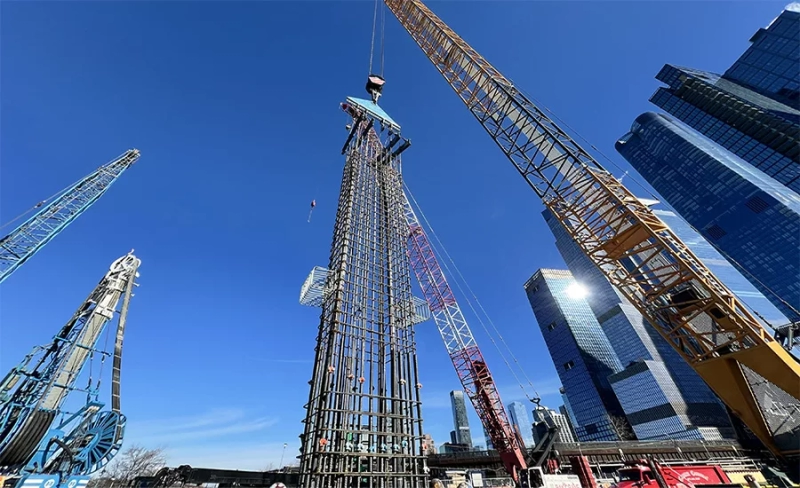
The suspension has paused active work across the project footprint. According to prior Gateway Development Commission notices and industry reporting, crews began winding down early civil construction packages tied to the New Jersey and Manhattan approaches and preparatory work in the Hudson River, while four major procurements covering the remaining construction packages—including elements required to advance full tunnel excavation—were placed on hold until federal funding is restored.
Project officials have warned that even brief interruptions can cascade through tunneling schedules because workforce remobilization, procurement restarts and safety re-certifications typically take weeks rather than days.
Two Lawsuits, One Project at Risk
The dispute is now unfolding on two parallel legal tracks with different implications for construction. In the Southern District of New York, New York and New Jersey are challenging the legality of DOT’s decision to suspend funding, arguing the move violated federal administrative law and caused immediate project harm.
Running alongside that case is a separate lawsuit filed by the Gateway Development Commission in the U.S. Court of Federal Claims, alleging that the federal government breached grant and loan agreements by withholding payments and seeking monetary relief.
Read More
Notice of Interlocutory Appeal
The Trump administration has argued that the commission contract case weakens the states’ lawsuit, contending that disputes over federal funding should be resolved exclusively in the Court of Federal Claims. Vargas rejected that argument, finding that the states had “limited ability to continue a critical infrastructure project from their own coffers” and that a later breach-of-contract action “will not provide any relief to those whose jobs are at imminent risk.”
Labor groups say that harm is already materializing. In a Feb. 6 statement issued after work was halted, North America’s Building Trades Unions President Sean McGarvey said stopping work on the project endangered “the livelihoods of thousands of skilled building trades members” and threatened a nationally critical transportation corridor.
New Jersey Gov. Mikie Sherrill, also responding on Feb. 6 to the initial court order blocking the freeze, said the states would continue pursuing full relief so construction could keep moving.
RELATED
Gateway Project Officials Sue Feds Over $16B Hudson Tunnel Funding Freeze
The next inflection point now sits with the Second Circuit. If the appeals court grants a stay, the funding freeze would remain in place during the appeal. If it does not, Vargas’ injunction barring enforcement of the funding suspension is set to take effect again when the administrative stay expires at 5 p.m. on Feb. 12.
ENR Commentary
Gateway Tunnel is Not a Political Lever
For contractors and project partners, the ruling will determine whether federal payments resume quickly enough to restart paused work or whether the Hudson Tunnel Project remains idled as litigation continues on parallel tracks. Even if funding ultimately flows, filings and prior project warnings show that tunnel-related work would return only through phased remobilization rather than an immediate ramp-up—leaving schedule certainty dependent as much on court calendars as on construction sequencing.