

Whistleblower suit alleges contractor used change orders to conceal $4.2M in savings on Texas affordable housing project
Federal agents searched three regional offices of Texas-based Cadence McShane Construction Co. Aug. 26 in connection with a HUD-financed affordable housing project at the center of a whistleblower lawsuit alleging the contractor concealed more than $4 million in construction savings, according to published reports.
Agents searched Cadence McShane offices in Austin and San Antonio and its Plano headquarters, the Austin Business Journal reported. Witnesses told the publication that federal and state officers left the Austin office with boxes and mobile phones.

Will Hodges
Photo courtesy of LinkedIn
Cadence McShane President Will Hodges told ENR Aug. 31 that the company is cooperating with authorities but declined to answer questions about the disputed accounting or federal searches because of the pending litigation. “We strongly dispute each and every allegation,” he said in an email, adding that the company is “confident the facts will show the allegations are without merit.”
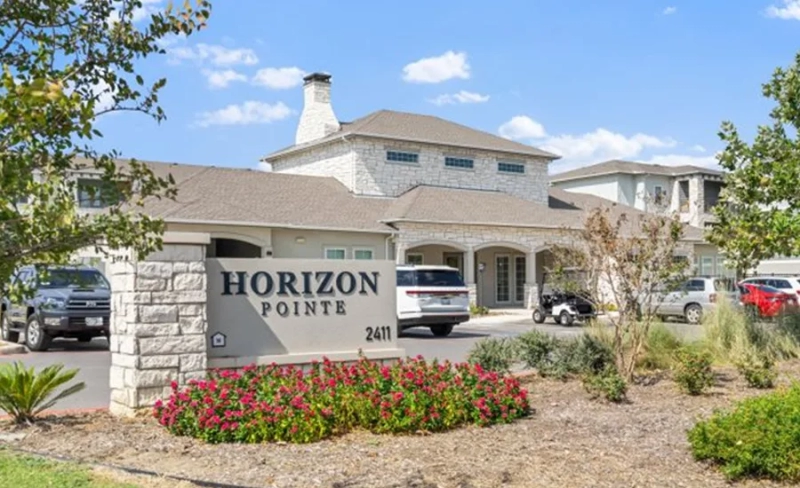
The False Claims Act case involves Horizon Pointe, a 312-unit affordable housing development in Converse, Texas, about 15 miles northeast of San Antonio. Randall Molnar, a Cadence McShane employee assigned to the project, filed the suit under seal in U.S. District Court for the Western District of Texas in May 2024. Andrea Hughes, another project employee, joined the case as a plaintiff in February 2026.
The complaint says Molnar was hired in March 2023 to take over project management after construction delays; Hughes was hired shortly afterward as a project manager. The plaintiffs allege Cadence McShane used change orders and separate internal and external accounting records to disguise construction savings as costs in order to retain profits it otherwise could not keep.
The project’s financing and construction agreements set the framework for that allegation. The complaint says Horizon Pointe’s HUD construction contract specified $2.46 million in builder’s profit, or 6% of construction cost. The plaintiffs also cite HUD standards that they say cap contractor overhead at 2%, profit at 6% and general conditions at 6%.
The construction contract operated through a joint venture between Cadence McShane and an affiliate of Opportunity Home San Antonio, the local housing authority. The complaint says Cadence McShane managed the venture and performed the construction work, while the Opportunity Home affiliate held a 99% ownership interest and the contractor held 1%.
Looking for quick answers on construction and engineering topics?
Try Ask ENR, our new smart AI search tool. Ask ENR →
Cadence McShane’s guaranteed builder’s profit was paid first. Any additional profit, including construction-cost savings remaining afterward, belonged to the joint venture and was to be distributed according to the 99%-1% ownership split, the complaint says.
Disputed Change Orders
The complaint says construction was budgeted at about $39.3 million when the project was approved in October 2021, based on Cadence McShane’s bid. It alleges the contractor increased its bid to about $45 million soon afterward, citing pandemic-related construction cost increases.
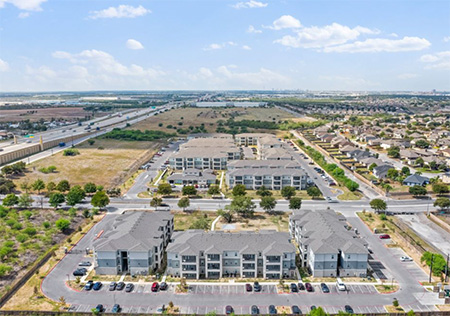
An aerial view of Horizon Pointe, a 312-unit affordable housing development comprising 13 residential buildings in Converse, Texas. The project’s construction accounting is at the center of a pending False Claims Act lawsuit.
Photo courtesy Cadence McShane Construction Co.
Molnar alleges Vice President Tyler Earle told him in March 2023 that the increase instead was intended to produce approximately $7 million, or 17%, in company profit. The following month, an internal Cadence McShane email reproduced in the complaint identified $4,263,158.32 in projected “buyout savings”—the difference between what the contractor had budgeted for subcontracted work and what it then expected to pay.
The plaintiffs contend Cadence McShane could not simply retain those savings because its builder’s profit was contractually limited and remaining project savings belonged to the joint venture. They allege the April email directed employees to create six financial adjustments totaling exactly $4,263,158.32, including change orders for concrete, wood framing and other work, that would make the savings appear as project costs.
Molnar and Hughes allege they recognized the proposed change orders as fraudulent and refused to prepare them. The complaint cites a subsequent May 2023 email in which Earle wrote that because the change orders had not been completed, he “went through and completed them for the team.”
Read More
U.S. District Court, Western District of Texas —
Second Amended Complaint
According to the complaint, Cadence McShane Director of Operations Brian Cox later told employees, “Anything that was above the 6% should technically go back to the owner and SAHA,” referring to the former San Antonio Housing Authority, now Opportunity Home. He allegedly added that the company shifted the money through internal change orders into another account “so it was shielded.”
The plaintiffs contend the accounting practice continued through project completion. They cite final February 2025 Job Cost Status Journals that they say showed approximately $4.24 million in savings internally while an external version showed the project operating at a loss.
Cadence McShane disputes that interpretation. In its motion to dismiss, the contractor says buyout savings are provisional during construction and may be reallocated as subcontract costs and unforeseen expenses change. It argues the plaintiffs wrongly treat differences between interim projections and committed costs as evidence that costs submitted to HUD were false.
Contractor Challenges False Claims Case
Cadence McShane also argues Horizon Pointe’s privately funded, HUD-insured loan never defaulted. Because HUD never paid an insurance claim, the contractor says there was no government payment capable of triggering False Claims Act liability.
Molnar and Hughes counter that Congress broadened the law’s definition of a claim in 2009. They argue monthly payment applications presented to HUD can qualify even when the requested money comes from a private lender.
The federal government initially declined to join the underlying False Claims Act case. DOJ later intervened only after Cadence McShane separately challenged the constitutionality of provisions allowing private whistleblowers to pursue claims on the government’s behalf. DOJ said it “takes no position as to the merits” of the contractor’s other dismissal arguments.
The motion to dismiss remains pending. A federal magistrate judge stayed discovery July 2 until the court rules on it.